

The Real Cost of a Data Breach in 2026

A data breach costs a business far more than the ransom, and for most businesses the ransom is the smallest line on the bill. The headline figure you have probably seen, a global average of $4.44 million, comes from IBM's 2025 Cost of a Data Breach Report and blends in Fortune 500 incidents that pull the average up. The number that matters for a business without a full security team is smaller but still capable of ending a company: the 2025 Sophos State of Ransomware report puts the average recovery cost for an organization of 100 to 250 people at $638,536, and that figure excludes the ransom entirely. The real damage is downtime, recovery, lost customers, and legal exposure. This post breaks down where the money actually goes, using the current industry data.
What does a data breach actually cost in 2026?
The most cited number is IBM's global average of $4.44 million per breach, which fell 9 percent year over year as faster detection brought costs down. In the United States, the trend runs the other way: the average US breach reached $10.22 million, an all-time high, driven by regulatory fines and slower investigations.
Two things are true about those numbers. They are real, and they are misleading for most businesses. Averages of this kind are dragged upward by a handful of massive enterprise breaches involving millions of records. A twelve-person accounting firm is not going to absorb a ten-million-dollar loss, because it does not hold ten million dollars of exposable data. So the honest question is not "what is the average," it is "what does a breach cost a business my size." That answer is different, and it is the one worth planning around.
What does a breach cost a business without a security team?
For a business in the 100-to-250-employee range, the average cost to recover from ransomware, before any ransom is paid, is $638,536, according to Sophos. Smaller firms sit below that, larger ones above, but the shape holds: the recovery bill dwarfs the ransom.
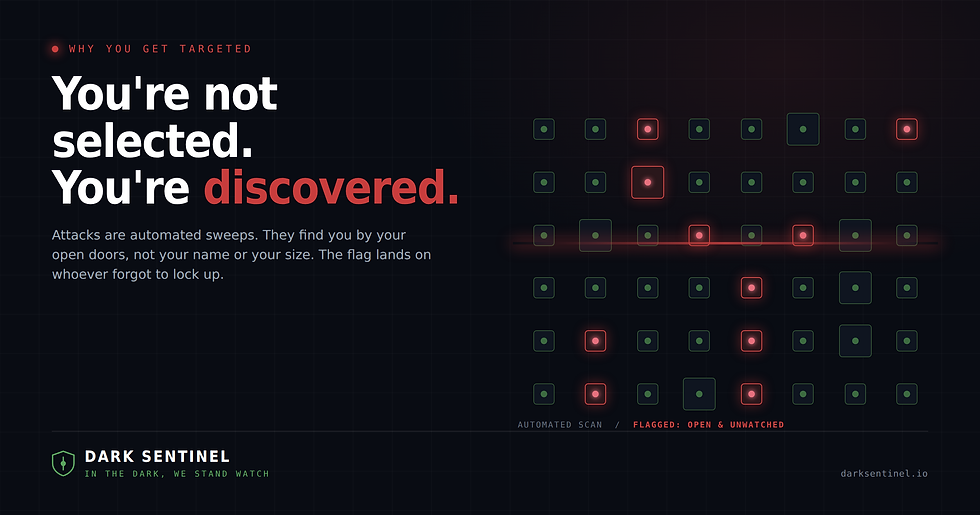
Here is why that matters. Businesses without a dedicated security team are not too small to be a target. They are the target. The 2026 Verizon Data Breach Investigations Report found that among ransomware victims whose size was known, 96 percent were small and mid-sized businesses, and it concluded plainly that attackers hit these organizations opportunistically. There were more than 7,000 confirmed SMB breaches in that single dataset. The reason is not that these businesses are valuable in the way an enterprise is. It is that they are reachable, and often nobody is watching.
The businesses that get hit hardest are not the ones with the most data. They are the ones with the least monitoring.
Where does the money actually go?
A breach bill is not one number. It is five, and the ransom is usually the smallest of them.
Downtime is the biggest cost for most businesses. When systems stop, revenue stops, but payroll, rent, and obligations do not. Sophos found that in 2025 about 53 percent of victims fully recovered within a week, which means nearly half did not. Every day your operation is dark is a day of lost billing you never recover.
Recovery and remediation come next. Rebuilding systems, restoring from backup, forensic investigation to determine what was taken, and the specialist labor to do all of it. This is the $638,536 figure, and it lands whether or not you pay a ransom.
Lost customers are the quiet, lasting cost. Clients who learn their data was exposed do not always come back, and in referral-driven verticals like dental, legal, and title, reputation is the whole business. IBM has found that lost business consistently ranks among the largest components of total breach cost.
Regulatory and legal exposure applies even to businesses that never make the news. Breach-notification laws exist in every US state. Depending on your vertical and the data involved, notification, legal counsel, and potential penalties stack on top of everything else.
The ransom, if you pay it, is the smallest slice. The 2026 DBIR put the median ransom actually paid at $139,875, and 69 percent of victims did not pay at all. Compare that to the six-figure recovery cost that arrives regardless. Paying the ransom does not spare you the recovery bill. It is an additional cost, not a substitute for one.
Why does it take so long, and why does that matter?
Time is the multiplier on every cost above. IBM found that in 2025 it took organizations an average of 241 days to identify and contain a breach, and that was a nine-year low. A threat that goes undetected for months does far more damage than one caught in hours, because the attacker has months to move, exfiltrate, and destroy backups.
This is the entire financial argument for detection and response. Every study points the same direction: the faster a breach is found and contained, the less it costs. IBM attributes the global decline in breach costs primarily to faster detection driven by security automation. The gap for most businesses is not that they lack tools. It is that no one is watching the tools around the clock, so detection that should take minutes takes months.
How ransomware changed the math?

Ransomware now appears in 48 percent of all breaches, up again year over year, per the 2026 DBIR. But the economics have shifted in a way that matters for your planning.
Fewer victims are paying: 69 percent refused in the latest data, up from prior years, as backups and recovery capabilities improved. Attackers have responded not by demanding more, but by inflicting more disruption. The modern ransomware play is to maximize operational pain, prolonged outages, halted operations, so that a business with no other way to recover feels forced to pay. That makes ransomware a business-continuity problem, not just an IT one. The defense is being able to detect and contain early, and to recover without the attacker's key.
What actually reduces the cost of a breach?
The data is consistent about what works, and none of it is exotic.
Faster detection and response is the single biggest lever. This is what MDR provides: analysts watching around the clock who contain a threat in its first hour instead of its hundredth day. We cover what that involves in our post on managed detection and response.
Tested, offline backups turn a catastrophe into an inconvenience. Sophos directly credits improved backup and recovery infrastructure for the large drop in recovery costs. If you can restore, you do not have to pay.
Multi-factor authentication closes the most common door. Stolen and reused credentials remain a leading way in, and MFA blocks most of that traffic before it starts.
Prompt patching matters more than ever. Vulnerability exploitation became the top initial-access vector in the 2026 DBIR, overtaking stolen credentials. Unpatched perimeter devices are being exploited within hours of disclosure.
None of these require an enterprise budget. What they require is that someone owns them and watches them. That ownership is the actual gap, and it is a smaller and cheaper thing to close than most business owners assume, especially measured against a six-figure recovery bill.
The bottom line
The scary million-dollar averages are real but not aimed at you. The number that should shape your decisions is the one that applies to a business your size: a six-figure recovery cost, arriving whether or not you pay a ransom, multiplied by every day you stay down and every customer who does not come back. The ransom is the cheapest part of a breach. Not being watched is the expensive part.
Most businesses can't afford a security team. Dark Sentinel gives them one. 24/7 managed detection and response, built on CrowdStrike Falcon.
Book a Free Security Strategy Session. We will look at where your real exposure is and what it would actually cost you, no pressure and no obligation.
IN THE DARK, WE STAND WATCH
Frequently Asked Questions
What is the average cost of a data breach in 2026? IBM's 2025 Cost of a Data Breach Report puts the global average at $4.44 million and the US average at $10.22 million. Those figures blend in large enterprise breaches. For a business of 100 to 250 people, Sophos reports an average ransomware recovery cost of $638,536, excluding any ransom.
Is the ransom the biggest cost of a ransomware attack? No. The ransom is usually the smallest component. The 2026 Verizon DBIR put the median ransom paid at $139,875, while recovery, downtime, lost customers, and legal costs typically add up to far more and arrive whether or not you pay.
Are smaller businesses really targeted? Yes. The 2026 Verizon DBIR found that 96 percent of ransomware victims whose size was known were small and mid-sized businesses, and that attackers target them opportunistically because they are reachable and often unmonitored.
How long does it take to detect a breach? On average, 241 days to identify and contain, according to IBM's 2025 report, and that was a nine-year low. The longer a breach goes undetected, the more it costs.
What reduces the cost of a breach the most? Faster detection and containment, tested offline backups, multi-factor authentication, and prompt patching. IBM attributes the recent global decline in breach costs primarily to faster detection.
Does cyber insurance cover all of this? Not automatically. Underwriters increasingly require controls like endpoint detection and response, and missing controls can reduce or void a claim. Coverage varies, so read the requirements before an incident, not after.


Comments